 NIKON Z 8 (42mm, f/8, 1/60 sec, ISO360)
Blog post 900. Can you believe it. 😉 This one is about travel cameras or what makes a perfect travel camera.
Today for most people the perfect travel camera is their smartphone and it is easy to see why. The smartphone is a device that is already with you practically all the time. It takes good images, offers various lenses and very good image processing. But its real virtue is convenience. It’s the Konbini egg sandwich of cameras.
And it’s small and light and you could think that those are the most important attributes of a travel camera. Small and light is everything, isn’t it? Well, not for me. I have travelled with very small and light cameras. The smallest was the Sony RX100, the second smallest the Ricoh GR. I loved the portability but I didn’t like the compromises. The Sony RX100 was just awkward to use. The retractable EVF was super small and the camera just didn’t make photography fun for me. The Ricoh was a different beast. I really enjoyed shooting it despite its many flaws but the final nail in the coffin were my eyes. I wear glasses but in order to shoot with an LCD I would have to take my glasses off in order to see a sharp image because my progressive lenses seem not progressive enough anymore. So a camera without a viewfinder has become a non-starter for me.
 NIKON Z 8 (45mm, f/5.6, 1/60 sec, ISO220)
 NIKON Z 8 (39mm, f/5.6, 1/60 sec, ISO250)
When the Fuji X100 came out I got the camera and I loved it. Back then there was no real alternative. A big APS-C sensor in a rather small and light camera. As soon as the Fuji X-Pro1 came out it replaced the X100 for me. The main reason (beside the fact that you can switch lenses) was that I have rather large hands and the X100 was just too small to hold comfortably for a long period of time. And when traveling and taking pictures I hold my camera in my hands for a very long time. In short: Today I need a camera with a good EVF and a camera that isn’t too small.
The Fuji X-Pro2 was my only camera for almost 8 years. I also used the X-Pro3 for some time but preferred the X-Pro2. When I got the Nikon Z8 about 2 years ago I already had concerns that it might be too big and heavy. I got it anyway because I was blown away by its speed, its electronic shutter and the viewfinder experience. I took it on a vacation to Japan and I learned that while it is an almost perfect camera I could not ignore its weight around my neck even with the Z 26/2.8 attached.
 NIKON Z 8 (38mm, f/5.6, 1/60 sec, ISO400)
 NIKON Z 8 (45mm, f/5.6, 1/60 sec, ISO160)
Last summer I got the Nikon Zf after a firmware update significantly improved the camera. And that is that. I took it to another vacation to Japan this January and it was a different experience. It’s not only the size and the weight. My years with Fuji made me appreciate the old fashioned knobs and dials. Of course it doesn’t work for everyone. Shooting banks can transfer your camera from a camera tailored for wildlife photography to portraits or landscape in an instant. But I don’t need that. The only thing I need is an easy to operate camera that doesn’t get in the way when taking pictures.
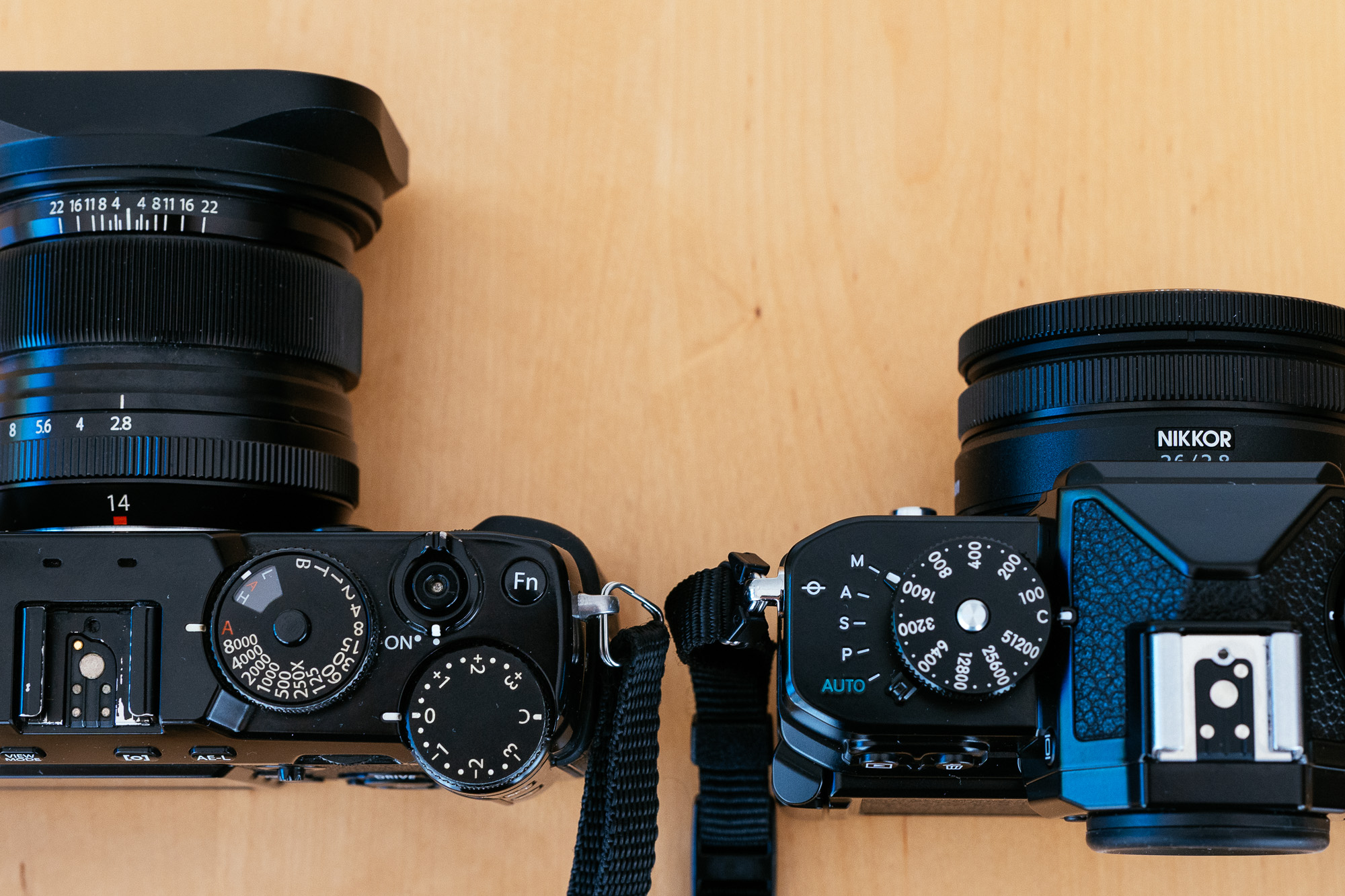
Here is how I normally shoot and used to shoot with Fuji. Camera set to A-Mode and Auto-ISO with a minimum shutter speed of 1/200s. This is my standard for street shooting and photography in general in good light. When I enter a cathedral, a temple or simple any indoor location where the light is dim I change the minimum shutter speed to 1/60s or 1/30s or even 1/15s depending on the light and if I plan to have people in the shot. On the Nikon Zf I simply switch from A-Mode to M-Mode. Now I can quickly change the shutter speed depending on the light. And to go full manual from there just means to turn the ISO dial. This is quick and easy and gives me the shooting experience I love. The knobs are beautifully made and a joy to use. The full Fuji experience but with a couple of advantages.
What are the advantages: First the sensor is bigger while pixel count is the same. That means that the Nikon Zf is far superior in low light. I never really had any complaints regarding high ISO on my Fuji but this is clearly a step above. The Zf also has IBIS. While I still think it is not that important for my photography it for sure helps to keep ISO low if there are no people in the frame.
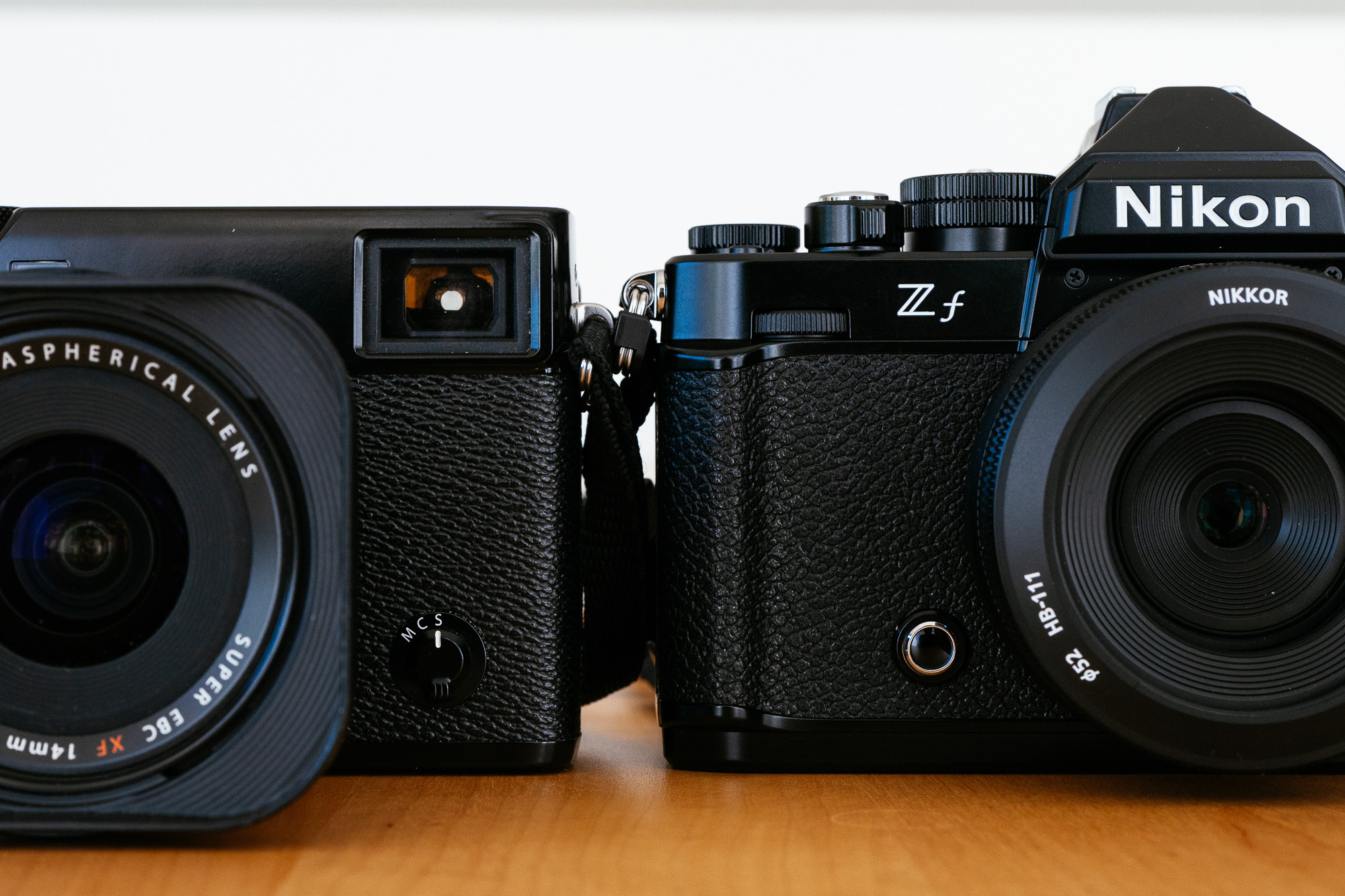
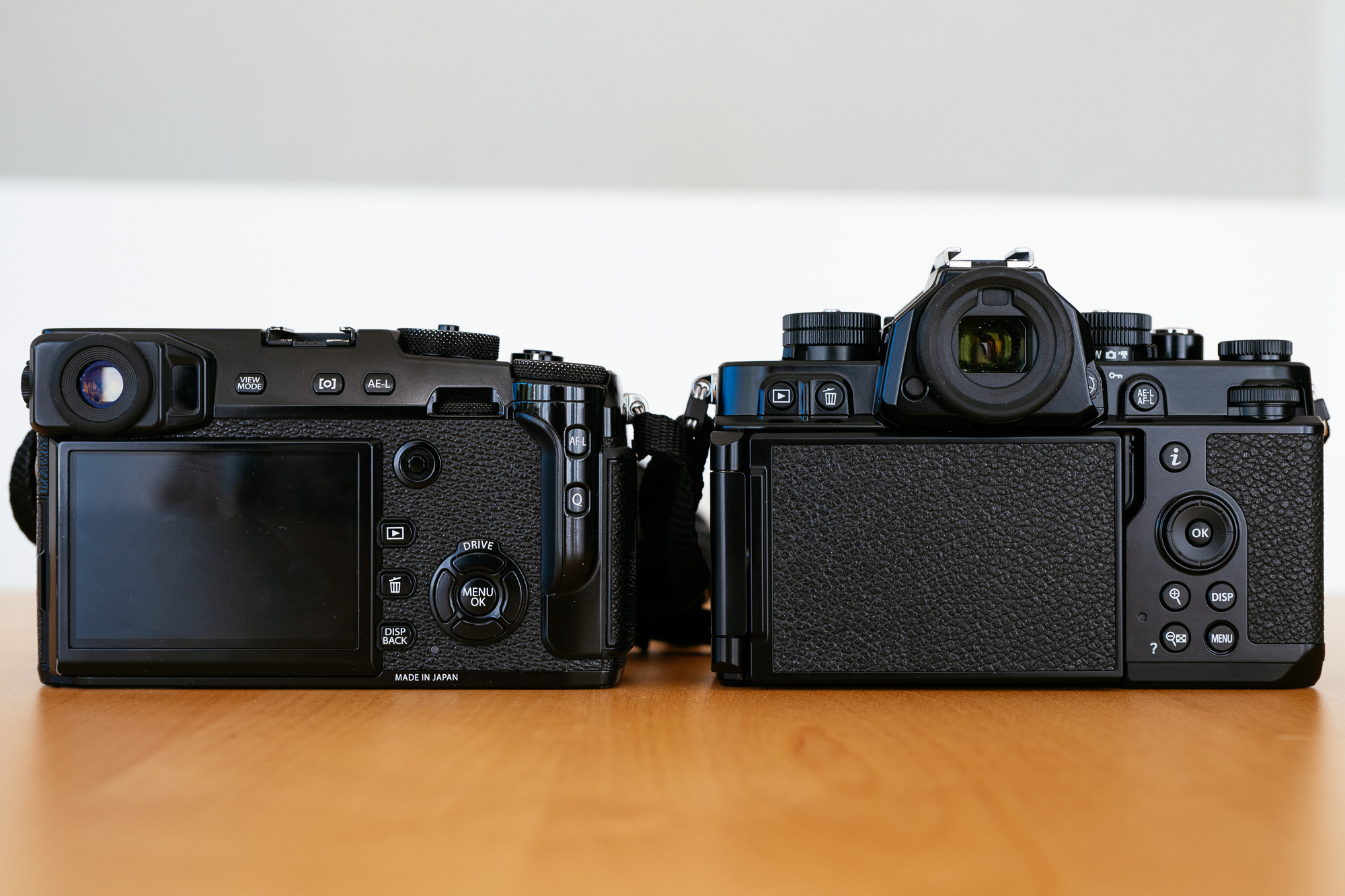
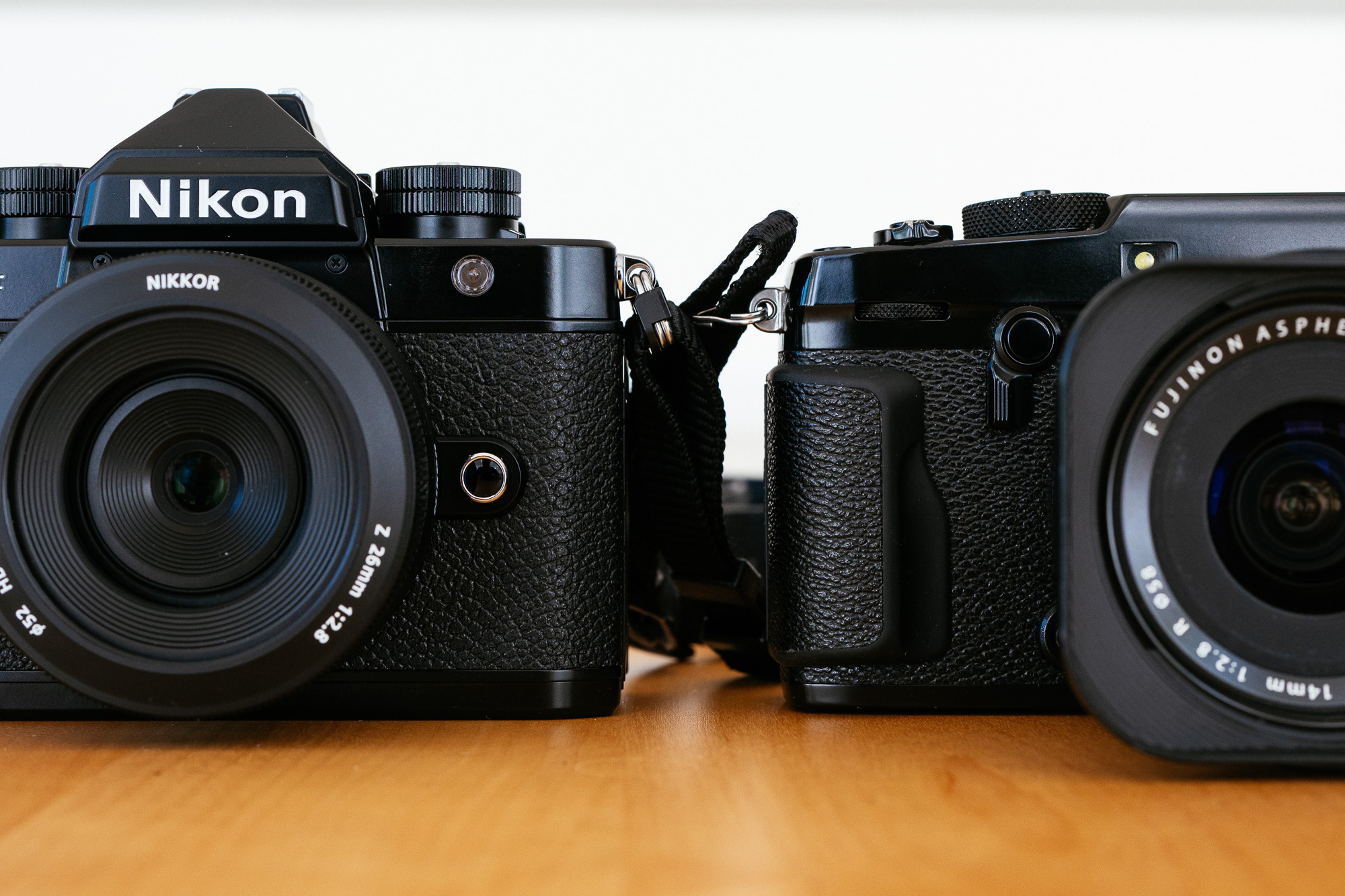
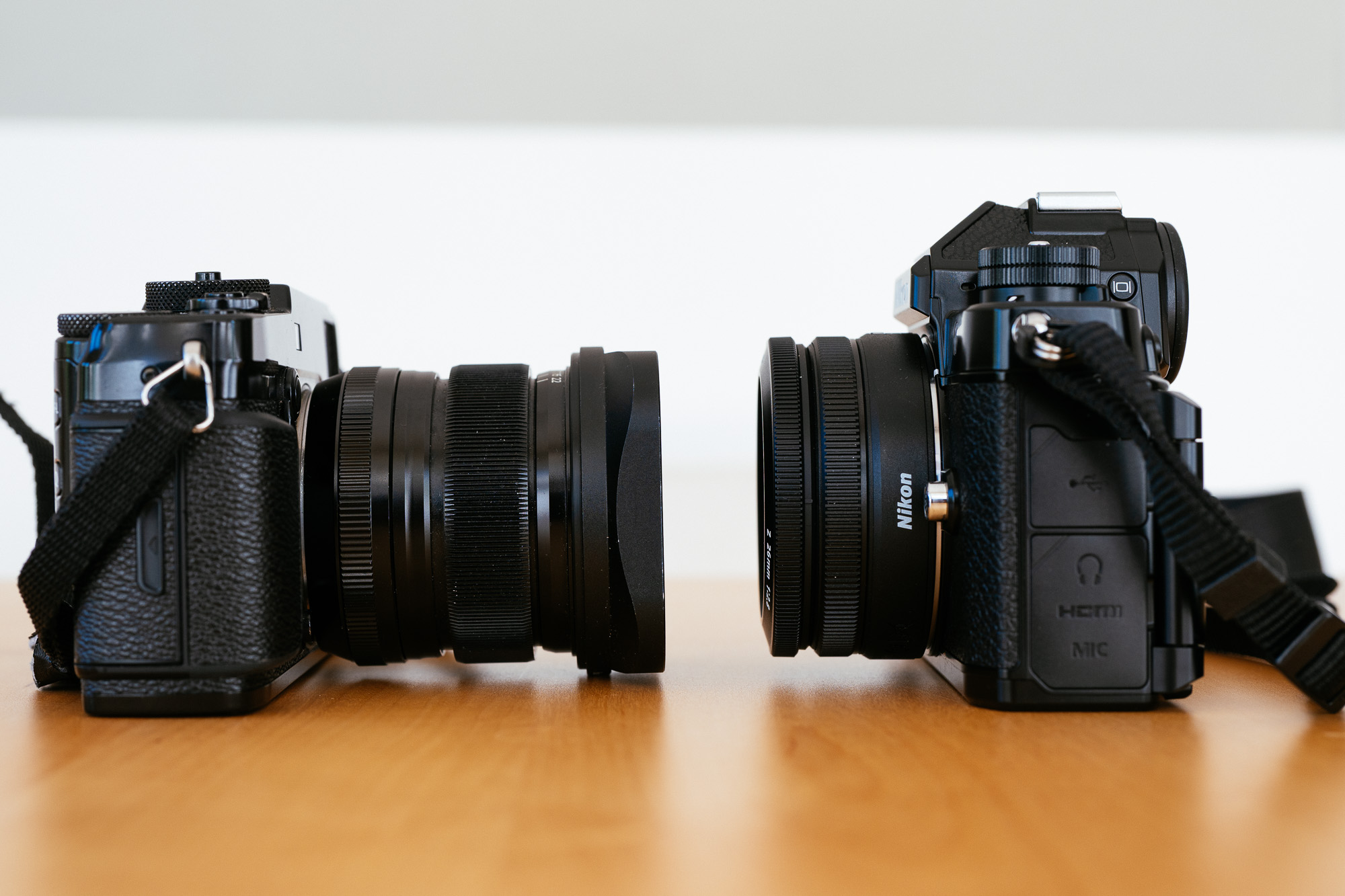
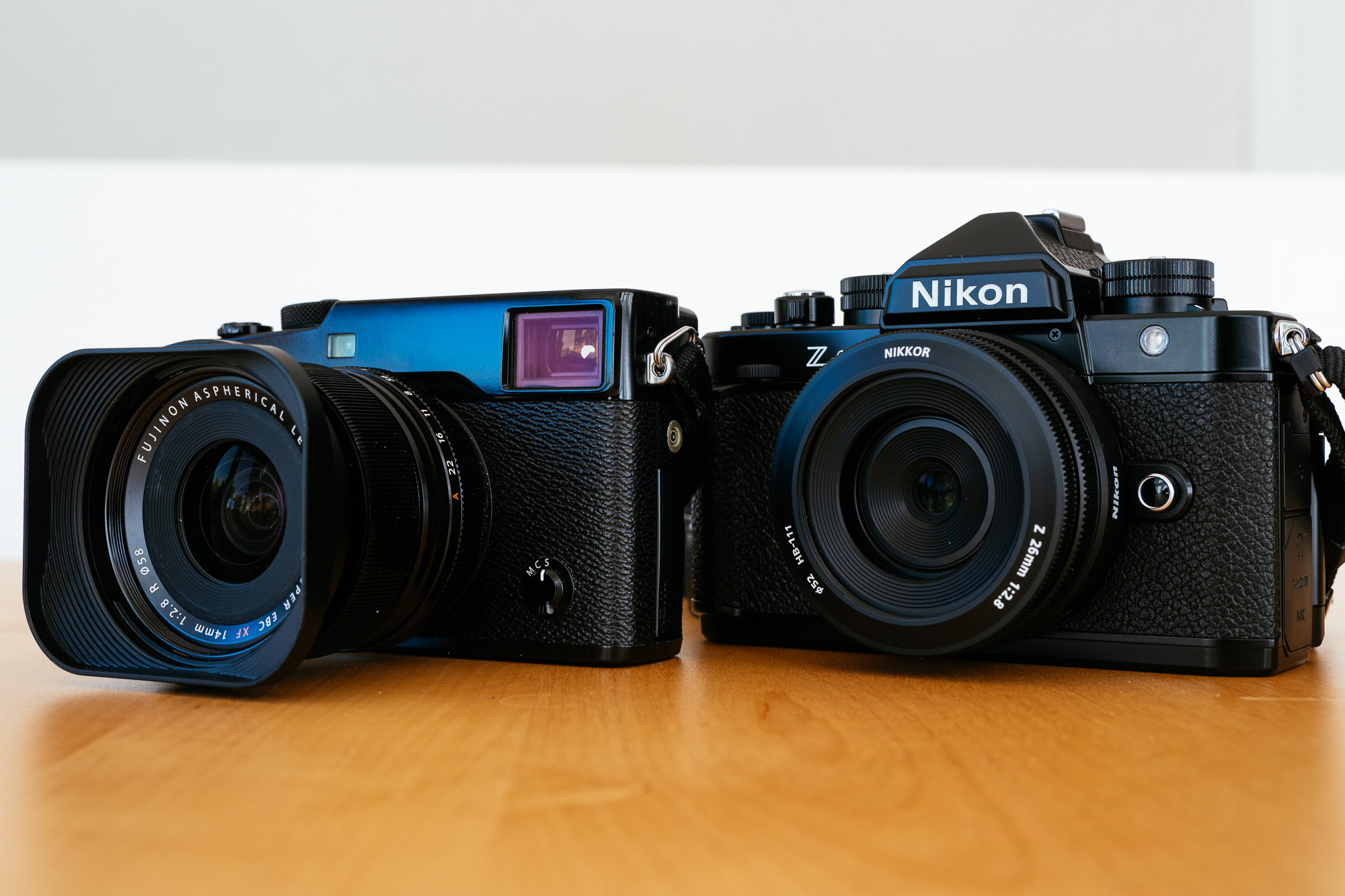
What about the lenses? My Fuji years have changed my view on lenses. Before I used to shoot f2.8 zooms because I loved the flexibility and image quality. But those lenses are big and heavy. With Fuji I mostly shot with three small primes. With Nikon it is almost the same. I initially got the 24-120/4 and the fantastic 14-24/2.8 but I also got the surprisingly good 40/2 and the great 26/2.8. The later has become my most used lens on the Nikon Zf. It’s a perfect match. It makes my camera even more compact than my Fuji X-Pro2 with the 14/2.8 attached and the weight is about the same too. I even made peace with the LCD – design. Because I never have to use the LCD I even prefer the design because the screen is now protected.
It seems I finally found my perfect travel camera. The camera that just works perfect for me. But who knows. Maybe someday I will get back to a camera with an integrated lens like the Fuji GFX-100RF. But right now I really love what Nikon has created with the Zf. I only hope that there will be more small prime lenses, ideally with an aperture ring.
So what is the perfect travel camera? There is not one solution that fits everybody. For some it is their smartphone, for some it’s a compact full frame or APS-C camera and for some it might be a film medium format camera or even an instant camera made of plastic.
The perfect travel camera is simply the one that you enjoy to shoot.
 NIKON Z 8 (39mm, f/8, 1/30 sec, ISO250)